
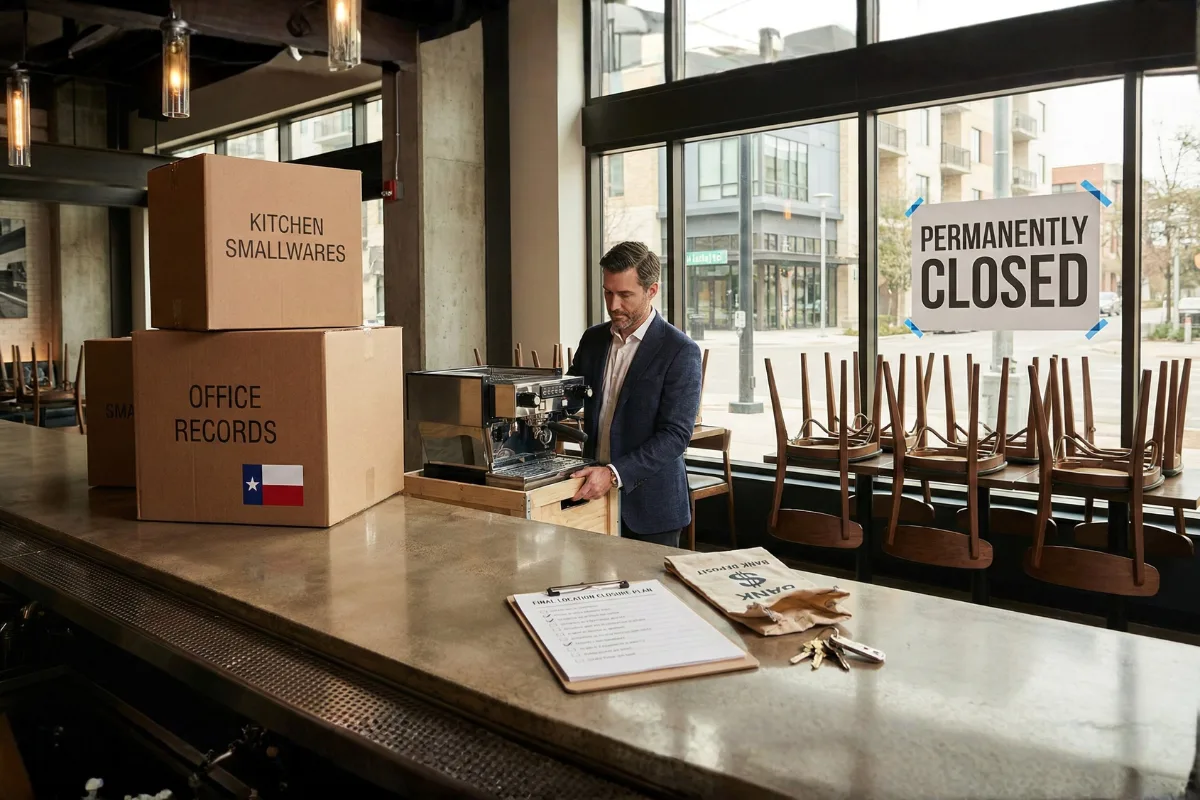
Closing an Austin restaurant or retail store requires a four-phase asset removal process. You must legally terminate the entity via Texas Comptroller Form 05-305. You must surrender TABC permits. You must use professional equipment appraisals to ensure UCC Article 9 compliance. You must meet Austin Resource Recovery waste mandates to guarantee a broom-clean lease handover.
In our 40 years of managing Texas auctions, we’ve seen business owners lose tens of thousands because they treated their closure like a fire sale. You have a landlord breathing down your neck and a mountain of inventory, but one wrong move with a TABC license or a UCC lien will cost you more than just your deposit.
This guide walks you through every step. You’ll learn exactly what to file with the Texas Secretary of State, how to surrender permits the right way, and which equipment deserves professional appraisal before you sell it cheap.
Four Phases That Protect Your Money
Smart utility timing and inventory triage separate profitable closures from money-losing disasters.
- Handle legal compliance. This means filing termination paperwork with Texas, clearing your tax accounts, and surrendering alcohol licenses properly. Skip these steps, and you’ll face penalties that follow you to your next business.
- Shut down operations systematically. You disconnect utilities on schedule, sort inventory by value, and secure your space against theft during the transition period.
- Execute your asset-removal strategy. Professional appraisals establish value floors for auctions. Online auction platforms connect you with registered buyers who pay fair prices for specialized fixtures.
- Manage facility logistics and lease return. Heavy equipment needs licensed movers. Bulk waste follows Austin’s recycling rules. Your final walkthrough proves you met “broom clean” conditions, so you get your deposit back.
Phase 1: Navigating Texas Legal Requirements and State Filings
Legal compliance for an Austin business closure involves filing Form 05-305 with the Texas Comptroller and surrendering TABC permits via the AIMS portal. Failure to clear UCC Article 9 liens before removing equipment can result in legal penalties and blocked asset sales.
Before removing a single piece of equipment, handle your legal obligations first. Texas requires formal termination paperwork, permit surrenders, and lien clearances. Skip these, and you’ll face penalties long after closing.
How to Use Texas Form 05-305 to Legally Terminate Your Entity
Texas requires formal entity termination before you can truly close your business.
Most Texas restaurants and retail stores operate as LLCs or corporations registered with the Texas Secretary of State. You must not abandon your business name and walk away. You need to officially terminate the entity.
The Texas Secretary of State’s Form 651 instructions explain that your certificate of termination must be accompanied by a tax-clearance certificate from the Texas Comptroller. This certificate is called Form 05-305.
It shows that all taxes under Title 2 of the Tax Code have been paid, and your entity is in good standing for termination. The Secretary of State won’t accept a simple website printout of your account status.
You need the official Form 05-305 certificate issued directly by the Texas Comptroller.
The certificate includes a “good through” date that must still be valid when you file your termination paperwork. Submit Form 05-305 together with your certificate of termination. The Texas Secretary of State allows you to choose an immediate effective date or schedule termination up to 90 days in the future.
This flexibility helps you coordinate with lease end dates and final asset sales.
Double-check that your certificate lists the correct legal entity name. Include names and addresses for all required governing persons. Discrepancies cause filing rejections and delays.
You also need to close your sales tax and franchise tax accounts with the Texas Comptroller. Cancel any seller’s permits tied to your location.
Surrendering Your TABC License Prevents Future Problems
You can’t abandon an active alcohol license. Texas law requires intentional surrender through official channels.
Texas restaurants and bars holding an Alcoholic Beverage Commission license must formally surrender it when closing. The TABC uses its AIMS portal (Alcoholic Industry Management System) to process these changes.
Stopping alcohol sales leaves your license dormant but active under state records.
For permanent closures, use the “Surrender License/Permit” action in AIMS. You’ll attest that operations have stopped and related accounts are closed. If you might reopen later, consider a temporary surrender instead.
This option preserves your right to reinstate the license down the road. Permanently surrendered licenses can’t be reinstated; you’d need to file a completely new application.
Notify Austin Public Health (or your local health authority) that you’re ceasing food operations. Ask if they need a final inspection or any closure records.
Some jurisdictions require a written closure notification to stop future inspections and violations on inactive permits.
Legal Requirements for Liquidating Business Assets Under Texas UCC
Texas UCC Article 9 controls how you sell financed equipment.
Many restaurants and retail stores finance equipment through loans or leases. According to Texas Business & Commerce Code § 9.611 (based on UCC Article 9-611), secured parties must send reasonable notice before disposing of collateral. This notice goes to debtors, secondary obligors, and other parties with recorded security interests.
Before you sell or remove any major equipment, confirm whether items are secured by UCC-filed collateral. Request lien-release letters or payoff confirmations from lenders. Even landlords sometimes hold perfected security interests in fixtures.
The Cornell Law School’s UCC analysis clarifies who receives disposition notice.
It’s not just you as the debtor. Other secured parties and lienholders also get notice rights. Check title clarity on every piece before sale. Make sure buyers understand whether they’re taking title “as-is” and whether any security interest remains on record.
Action Item: Run a quick UCC search on your business name and key owners before starting asset sales. The Texas Comptroller offers online UCC filing searches. Keep copies of all lien releases and payoff letters in your move-out file.
Phase 2: Operational Shutdown and Utility Management
Smart utility timing and inventory triage separate profitable closures from money-losing disasters.
Disconnect services too early, and you’re stuck in the dark; wait too long, and you’re paying for power you don’t need.
Austin Energy Disconnect Process Saves Money
Schedule disconnections strategically to support your asset-removal timeline.
Austin Energy provides commercial utility services throughout the city. Contact Austin Energy Customer Care at 512-494-9400 or use their online portal. Schedule disconnection for after you complete inventory removal and final cleaning.
You’ll need power for safe asset loading, security systems, and final walkthroughs.
The City of Austin Utilities’ start-stop-transfer guide recommends submitting disconnect requests several days in advance. After disconnect, confirm the final meter reading. Keep a copy of your final bill with any forwarding address.
Important: Disconnect hardwired security systems and lights safely before power termination. Once electricity stops, some systems lock you out or create safety hazards during equipment removal.
Inventory Triage: Separating High-Value Assets from Trash
Central Texas retail closures involve thousands of SKUs. Start with a complete inventory count, then sort items into specific categories to recover capital effectively.
- Resale-ready: Sell items as-is to the public or through online marketplaces.
- Refurbish-and-repair: Fix minor issues to command higher auction prices.
- Parts and scrap: Break down racks, shelving, and broken tools for parts value. Do not dump metal shelving that scrap yards will buy.
- Consignment merchandise: Establish return terms or buyback agreements with vendors immediately to avoid ownership disputes.
- Regulated items: Send industrial cleaners, batteries, and certain electronics to licensed disposal handlers. True trash goes to legal bulk-waste channels only.
Quick Decision: Sell highest-value items through short-term consignment while moving mid-tier stock into immediate auctions or closeout sales.
Phase 3: The Asset Removal Strategy (Maximizing ROI)
Professional appraisals, strategic auctions, and proper documentation turn your closing assets into recovered capital instead of fire-sale losses.
Why Professional Appraisals Prevent Financial Loss
At our Lakeway office, our data shows that Austin owners who skip professional appraisals consistently sell equipment for 30-50% below market value. We utilize industry standards to identify ‘value floors’ before the auction begins, ensuring your specialized fixtures, from commercial kitchen lines to POS systems, reach fair market value through our global network of registered buyers.
According to appraisal industry guides for restaurant equipment, professional valuations identify realistic value standards. You’ll learn fair market value, replacement cost, and orderly liquidation value depending on your sale timeline and conditions.
Appraisers document condition, age, and market comparables for key assets. This stops buyers from lowballing by claiming “everything is old and worthless.” Commercial kitchen lines, shelving bays, and POS systems all have documented resale markets with pricing benchmarks.
Independent appraisals also support financing decisions, insurance claims, and tax write-downs. You need defendable values for IRS documentation if you’re claiming losses.
Expert Tip: Choose appraisers who specialize in restaurant or retail equipment and hold credentials through organizations like the Appraisal Institute.
Generic appraisers miss industry-specific value drivers.
Online Auctions Connect You With Serious, Registered Buyers
Specialized fixtures like commercial kitchen exhaust hoods and deli cases need qualified buyers.
Industry-specific auction platforms market to registered buyers across Texas and beyond. These buyers bid more aggressively because they understand the equipment and already have businesses that need it.
Create high-quality listings for every item with clear photos, model numbers, serial numbers, power requirements, dimensions, and removal complexity notes. Buyers need to know if items are curbside accessible or require lift gates.
They want to see if ceiling-mounted equipment needs specialized rigging.
Define clear load-out terms upfront. Specify who packs items, how long buyers have for pickup, and whether you allow third-party movers on site. Establish a bidding schedule (timed or sealed-bid) and plan for at least one on-site inspection for serious bidders.
Pro Tip: Attach short video clips showing equipment running. A 30-second clip of a working oven or freezer unit eliminates buyer uncertainty.
Managing Titles and Transfer Documents Prevents Disputes
Selling equipment without proper transfer documentation creates legal nightmares.
Draft a clear bill of sale for each significant transaction. Reference item descriptions, condition notes, and “as-is, no warranty” disclaimers. This protects both parties and establishes clear expectations.
If equipment is leased or financed, confirm that the lender issues release documentation before assets leave your property. According to Cornell Law School’s UCC guidance, you can’t sell collateral subject to perfected security interests without lender permission or payoff.
Address software and service contracts separately. POS systems, music services, security contracts, and telephony usually don’t transfer to new owners.
Cancel these or document that buyers must sign up independently.
Phase 4: Facility Logistics and The “Make Good” Clause
Licensed contractors, compliant waste disposal, and documented “broom clean” walkthroughs protect your security deposit and prevent surprise deductions.
Who Should Handle Heavy Equipment Removal in Austin
DIY heavy equipment removal causes injuries, property damage, and lease violations.
Removing commercial kitchen lines, walk-in freezers, or large shelving bays requires trained riggers or equipment movers. Hire contractors with documented commercial-environment experience and current insurance coverage.
Coordinate with licensed plumbers and electricians for disconnecting hardwired or plumbed fixtures. Many Texas jurisdictions require licensed tradespeople for permanent utility disconnection.
Your landlord’s insurance may also mandate licensed contractors for liability reasons.
Confirm your removal plan respects structural limits. Check ceiling heights, door widths, and floor-load ratings in older Austin buildings. Some downtown buildings have freight elevator restrictions or loading dock schedules you must follow.
Critical Step: Review the contractor’s Certificate of Insurance before work begins. Require additional-insured status naming you and your landlord.
Austin Resource Recovery Rules You Can’t Ignore
Austin’s Universal Recycling Ordinance requires commercial properties to provide recycling services and maintain documentation.
The City of Austin’s commercial recycling requirements apply even during closure periods. If your store sits within Austin city limits, temporary dumpster or roll-off plans must comply with recycling mandates.
Identify which materials are recyclable: cardboard, glass, many plastics, and metals. Everything else goes to landfill through approved channels. If you’re not using City of Austin pickup, contract a recycling hauler and retain invoices and container-size documentation.
According to Austin Resource Recovery’s administrative rules, you must show compliance through documentation.
Plan donation stops for usable items. Furniture, reusable packaging, and certain equipment go to local nonprofits or donation programs. These organizations issue receipts that satisfy recycling-friendly requirements.
Returning Your Space “Broom Clean” Protects Your Deposit
Don’t let the term ‘broom clean’ fool you; it is the primary source of deposit disputes in Texas. We once worked with an Austin owner who lost a $10,000 deposit because they left tenant-installed signage backing on the wall. The landlord defined this as an ‘unauthorized alteration.’ In our system, ‘everything is gone’ means exactly that, ensuring your space is reasonably clean, empty, and free of security brackets or custom counters that violate your ‘make-good’ clause.
Commercial lease experts define “broom clean” as removing trash, personal property, and tenant signage, leaving the space sweepable with a broom. It doesn’t mean brand-new condition. It means reasonably clean and empty.
Some leases require more. You might need to remove built-in fixtures or tenant improvements: custom counters, signage backing, security brackets, or built-in shelving.
You might need to patch holes and repaint walls to match the prior condition.
Your 10-Point Lease-Return Checklist:
- Walk the space with your landlord and define broom clean in writing.
- Remove all tenant-installed signage, curtains, and mounted displays.
- Patch and paint walls around removed fixtures.
- Deep-clean carpets and hard floors to building-standard appearance.
- Schedule contractor work well before final possession dates.
- Confirm Austin Energy final meter reads and complete equipment disconnects.
- Gather all waste-hauling and recycling receipts into a single closure folder.
- Take dated, timestamped photos of each room once clean.
- Request a move-out sign-off letter from your landlord referencing agreed deductions.
- Store all records for the Texas statutory period.
Schedule a pre-final walkthrough with your landlord two weeks before your lease ends. Create a punch list of required tasks together. This eliminates deposit disputes because expectations are documented before the final inspection.
Final Thoughts: Your Checklist Determines Your Recovery
Closing a Texas restaurant or retail store doesn’t have to drain your bank account. Smart owners follow structured checklists that protect deposits, maximize asset values, and avoid surprise costs.
File your Texas termination paperwork early. Get professional appraisals before selling equipment. Use online auctions to reach qualified buyers who pay fair prices. Document everything for your landlord walkthrough.
Your restaurant or retail store asset removal checklist isn’t just paperwork. It’s the difference between losing money on closure versus recovering enough to fund your next opportunity.
Your Biggest Questions About Closing a Texas Restaurant or Retail Store (Answered)
How long does the restaurant liquidation process take in Austin?
A complete closure takes four to twelve weeks depending on your lease end date, asset volume, and whether you need UCC lien clearances and Texas Secretary of State termination processing.
How long does the entire asset removal and auction process typically take?
Asset removal and auctions run two to six weeks from initial appraisal through final load-out, with online auctions adding one to two weeks for bidding periods and buyer pickup scheduling.
Can I abandon equipment I don’t want in the leased space?
No. Abandoning equipment is a direct violation of the ‘make good’ clause in standard Texas commercial leases. This typically results in the total forfeiture of your security deposit, plus additional landlord-charged removal fees and potential legal claims for facility damage.
Do I need a specific permit to move heavy commercial equipment in downtown Austin?
Downtown Austin buildings often require loading dock reservations and freight elevator scheduling, but permits depend on your specific building and whether you’re blocking public right-of-way during load-out.
Do I need a professional appraisal before liquidating my store assets?
Appraisals aren’t legally required, but owners who skip them typically sell equipment for thirty to fifty percent below market value, losing tens of thousands in recoverable capital.
What is the legal benefit of choosing business liquidation over Chapter 7 bankruptcy in Texas?
Voluntary business liquidation allows you to control asset sales and maximize returns. Chapter 7 bankruptcy hands control to a court-appointed trustee who frequently fire-sells assets to cover administrative fees first.


